
Ensuring EV driver confidence through low-latency availability data of EV charge points
The increasing adoption of electric vehicles necessitates a robust and extensive EV charging infrastructure. Crucially, this growth also elevates the demand for accurate, real-time information regarding the infrastructure’s status and availability.
And nothing is more frustrating for an EV driver than following a navigation system to an “available” charging station, only to find it currently occupied or worse “out of service”.
Unfortunately, this isn’t a hypothetical situation. It is a persistent, daily reality for EV drivers, globally. The core reason lies in the complex and multi-layered data chain that creates ‘latency’.
Changes in a charge point’s availability status must travel a circuitous route: from the charger itself, through the Charge Point Operator’s (CPO) back-end system, to the CPO’s and Car OEM’s myriad of partners (including map providers, roaming hubs, Mobility Service Provider (MSP) platforms, and navigation software vendors) where it feeds into routing algorithms before finally reaching the car manufacturer’s back-end, and subsequently, the end-user’s device or car. This circuitous route increases the time it takes for a charger to show as unavailable when a car is plugged in.
Eco-Movement, already trusted for its reliable EV charging station data, embarked on an effort to also have the fastest data by reducing the latency of the EVSE (Electric Vehicle Supply Equipment) status messages. A dedicated pipeline now delivers lightweight “PATCH updates” directly from the Charge Point Operator (CPO) back-end to our customers in mere milliseconds.
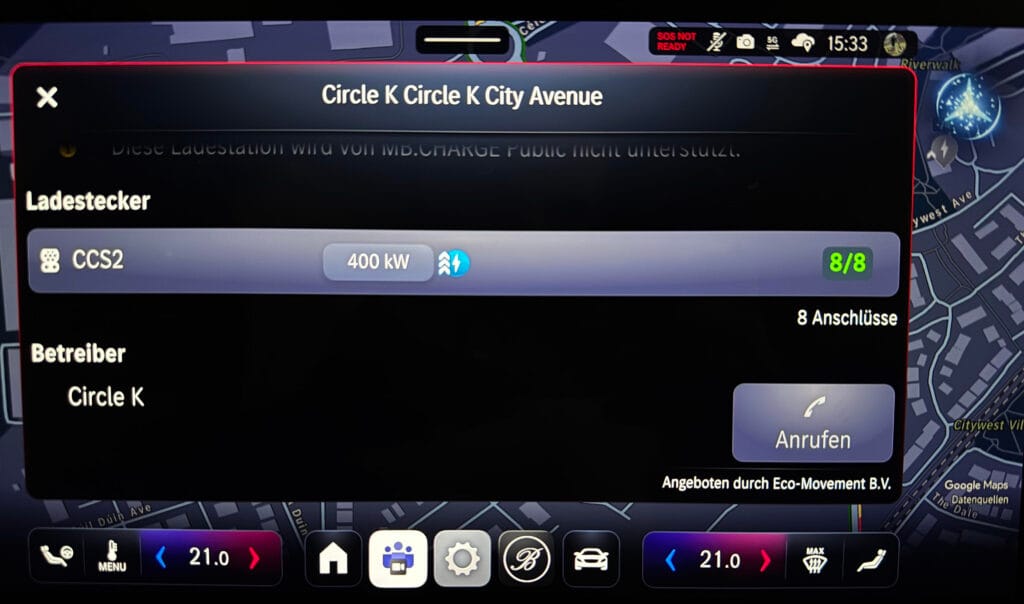
The real-world impact was recently validated by one of our automotive OEM partners that specialises in high-end passenger vehicles. They conducted end-to-end latency tests in several countries by plugging in their cars and measuring the time until the status changed on their screens.
The Result: Status updates, which previously took minutes, now typically appear in a matter of seconds.